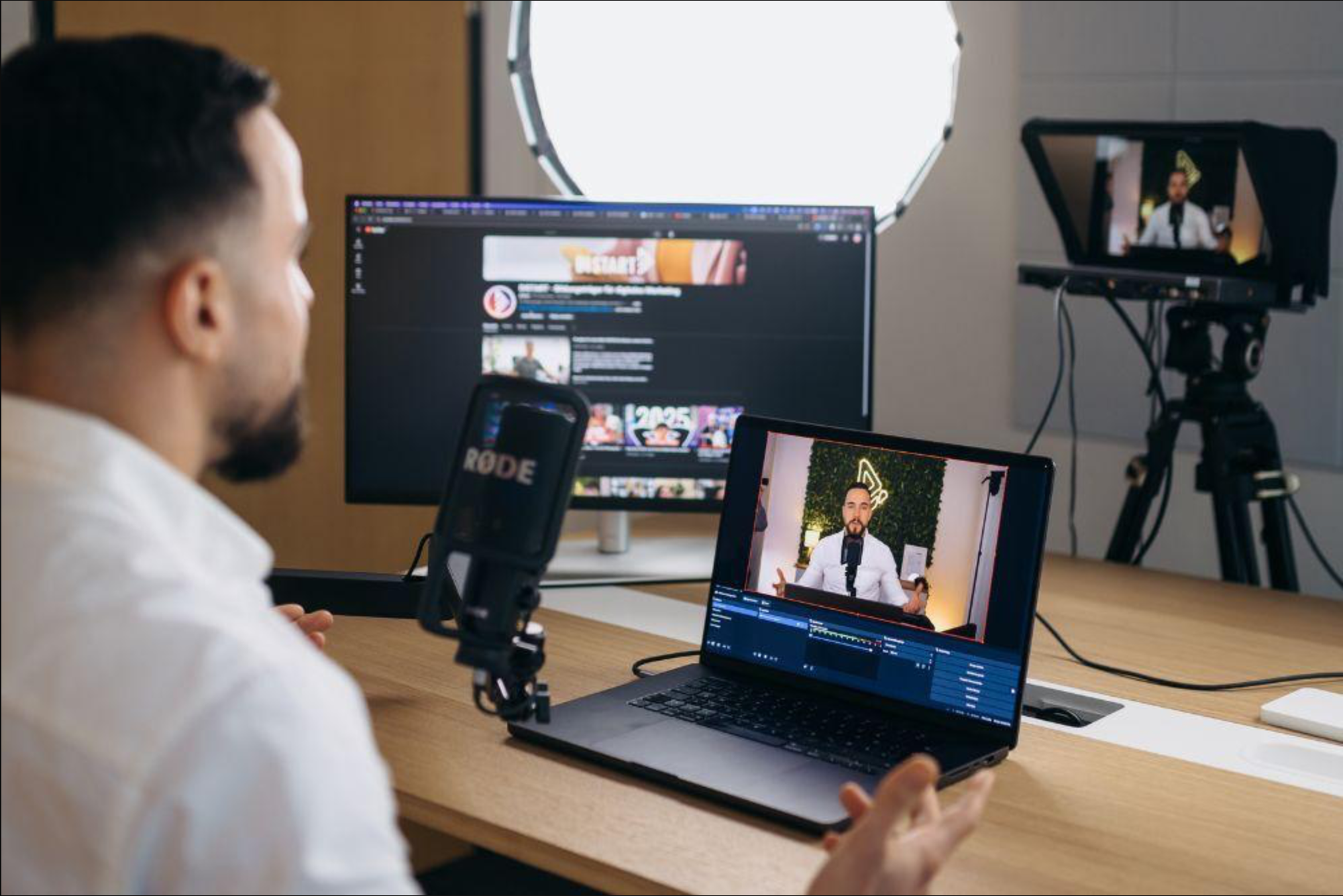
YouTube can be one of the most powerful platforms for building brand awareness, authority, and trust. But simply creating a channel and uploading videos doesn't guarantee growth.
Many brands make the same mistakes: they create content around what the company wants to say, focus too heavily on views, underestimate titles and thumbnails, and treat every video as an isolated piece of content.
The result is a channel that may look active but doesn't necessarily build a valuable audience.
The strongest YouTube marketing strategies for brands work differently. They connect audience research, content strategy, packaging, retention, analytics, and business objectives into a repeatable system.
QUICK ANSWER
Most brands fail on YouTube because their content isn't built around a clear audience, strong packaging, retention, and a measurable business objective.
7 YouTube Marketing Mistakes Holding Brands Back
If your brand is publishing consistently but your channel isn't generating meaningful growth, the problem may not be how often you're publishing. It may be the system behind what you're publishing.
01
Treating YouTube Like an Advertising Channel
Many brands approach YouTube as another distribution channel for their marketing campaigns. They produce promotional videos, announce products, explain services, and expect the audience to watch simply because the brand published them.
02
Creating Content Without a Clearly Defined Audience
A channel can publish consistently and still struggle to grow when its content isn't designed for a clearly defined audience.
One of the most common mistakes brands make is trying to speak to everyone at once. The content becomes broad, the topics become predictable, and the channel has no clear reason for a specific viewer to come back.
A fitness brand, for example, could create videos for beginners, experienced athletes, people trying to lose weight, people training for strength, or people simply looking for healthier habits. Those audiences may all be interested in fitness, but they don't necessarily want the same content.
When a brand knows exactly who it is trying to reach, content decisions become much easier. You can identify the questions that audience asks, the problems they are trying to solve, the language they use, and the type of videos they are most likely to watch.
This also makes it easier for YouTube to build an understanding of who responds to the channel's content. Instead of constantly changing direction, the channel can develop a recognisable content pattern around a particular audience.
BORN21 INSIGHT
Audience clarity doesn't mean limiting growth. It gives the channel a starting point from which meaningful growth can happen.
The strongest YouTube content strategies don't begin with a list of videos a brand wants to produce. They begin with an understanding of the people the brand wants to attract.
Once that audience is clear, the next question becomes much more useful: What would make this person choose to watch?
That question should influence everything from the topic and format to the title, thumbnail, opening, and eventual call to action.
03
Choosing Topics Around the Brand Instead of the Audience
Brands naturally want to talk about themselves. They want to explain their products, showcase their expertise, announce new services, and communicate what makes them different.
But what a brand wants to say isn't always what an audience wants to watch.
This creates another common problem: a channel becomes a collection of videos built around the company's internal priorities rather than the audience's interests.
A company might publish a video called "Why Our New Product Is Better" because the product launch is important internally. But the audience may be searching for something completely different—how to solve the problem the product addresses, how to compare available options, what mistakes to avoid, or what they should know before making a decision.
The opportunity is to connect those two worlds.
Instead of starting with "What do we want to tell people?", start with "What does our audience already care about?"
The brand's expertise can then become the answer.
BORN21 INSIGHT
The best brand content doesn't hide the commercial objective. It earns attention by solving a problem or satisfying a genuine interest before turning that attention toward the brand.
This is where a strong YouTube content strategy becomes more than a publishing calendar. Each video should have a reason to exist, a specific audience it is designed for, and a clear role within the broader channel.
Some videos can introduce a problem. Others can educate, compare, demonstrate, build trust, or move an interested viewer closer to a business decision.
When those pieces work together, the channel starts behaving like a system rather than a collection of unrelated uploads.
04
Underestimating Titles and Thumbnails
Even a genuinely useful video can struggle if nobody has a compelling reason to click it.
This is where titles and thumbnails become critical. They are often the first signals a potential viewer sees before deciding whether a video deserves their attention.
Many brands spend significant time producing the video itself and very little time deciding how that video should be presented. The result can be technically excellent content with weak packaging.

A title that simply describes the video isn't necessarily a reason to watch it. Titles and thumbnails also work alongside YouTube SEO to help a video reach the right viewers, but discoverability alone isn't enough if the packaging doesn't earn the click.
A thumbnail that looks like a corporate presentation may communicate the brand clearly while doing very little to create curiosity.
Strong packaging creates a clear promise. It tells the viewer what they can expect to gain from watching while giving them enough curiosity to take the next step.
That doesn't mean using misleading clickbait. The video still needs to deliver what the title and thumbnail promise.
BORN21 INSIGHT
Packaging isn't decoration added after a video is finished. It is part of the content strategy itself.
The best approach is to think about the idea, title, thumbnail, and opening together. If the central idea isn't compelling enough to package clearly, the problem may begin before production even starts.
For brands investing heavily in video production, improving packaging can be one of the simplest ways to make existing content more competitive.
05
Losing Viewers in the Opening
A title that simply describes the video isn't necessarily a reason to watch it. Titles and thumbnails also work alongside YouTube SEO to help a video reach the right viewers, but discoverability alone isn't enough if the packaging doesn't earn the click.
A thumbnail that looks like a corporate presentation may communicate the brand clearly while doing very little to create curiosity.
Strong packaging creates a clear promise. It tells the viewer what they can expect to gain from watching while giving them enough curiosity to take the next step.
That doesn't mean using misleading clickbait. The video still needs to deliver what the title and thumbnail promise.
BORN21 INSIGHT
The first few moments shouldn't be treated as an introduction to the brand. They should be treated as an introduction to the value of the video.
This is also why audience retention matters. Views can tell you that people clicked, but retention can reveal whether the video continued to deliver enough value to keep them watching. When brands study where viewers leave, they can identify patterns in their openings, pacing, structure, and storytelling—and use those insights to improve future videos.
06
Measuring Views Instead of Business Relevance
Views are easy to understand, which makes them an attractive metric. But a large view count doesn't automatically mean a YouTube channel is creating meaningful business value.
A video can generate thousands of views without reaching the people a brand actually wants to attract. Another video might generate fewer views but reach a highly relevant audience, create qualified interest, strengthen brand authority, or contribute to conversions.
This doesn't mean views are useless. They are an important part of understanding content performance. The problem comes when views become the only measure of success.
Brands should connect YouTube performance to the objective behind the channel.
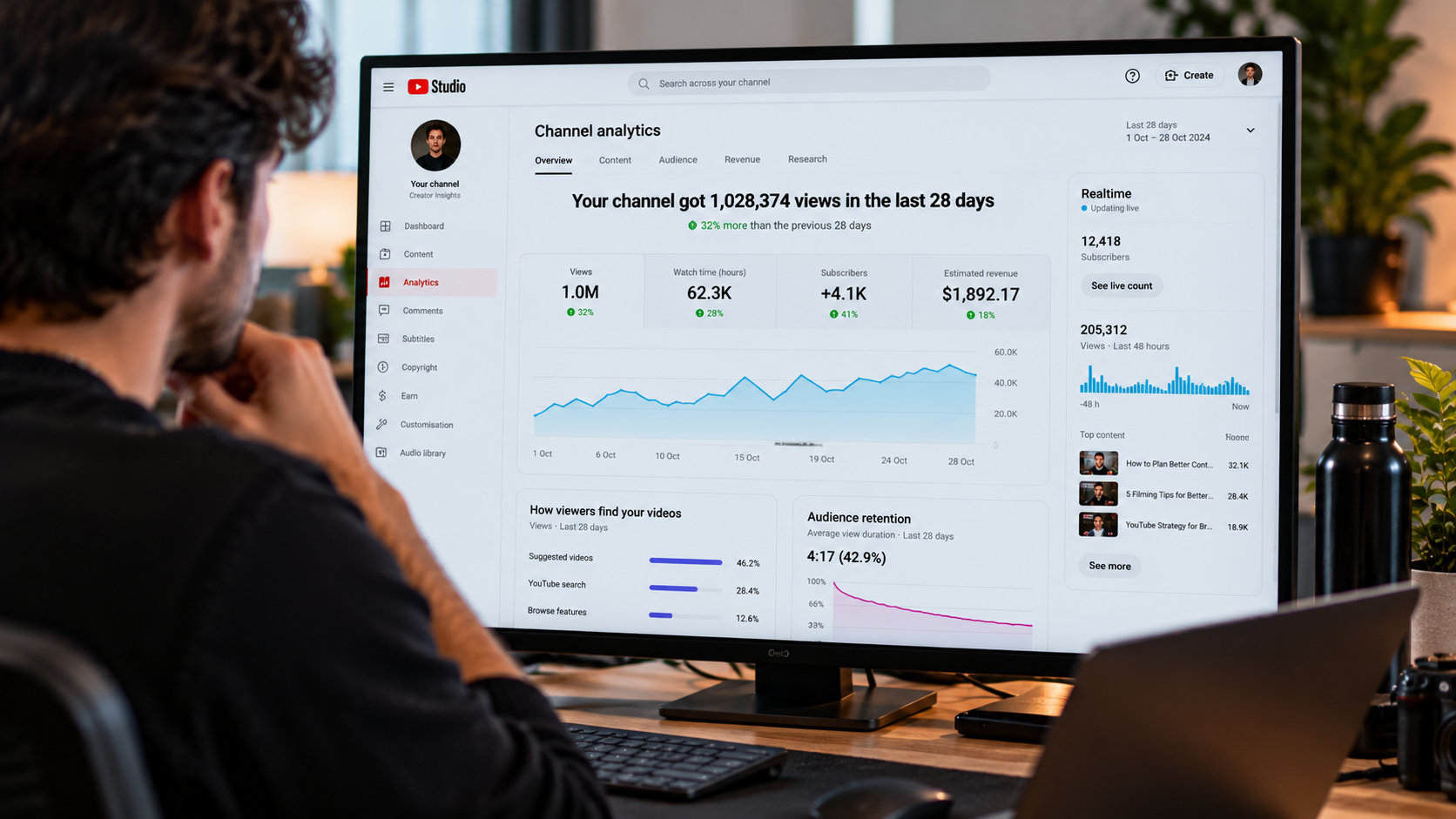
Depending on the business, that could mean looking at audience retention, returning viewers, engagement, website traffic, leads, enquiries, conversions, or other meaningful actions.
BORN21 INSIGHT
The right question isn't simply "How many people watched?" It's "Did the right people watch, stay engaged, and move closer to the outcome the business cares about?"
This changes how content decisions are made. Instead of automatically repeating whatever produced the highest number of views, brands can identify which topics, formats, and audiences are creating the strongest combination of attention and business relevance.
07
Treating YouTube as a Collection of Videos
Perhaps the biggest mistake is treating every upload as a separate project.
A successful channel isn't simply a library of videos. It is a connected body of content that gives viewers multiple reasons to continue exploring the channel.
One video can introduce an idea. Another can answer the next question. A third can go deeper. Related videos can then help a viewer move through the subject while becoming increasingly familiar with the brand.
This creates something much more valuable than individual video performance: a channel with momentum.
A strong YouTube strategy therefore considers how videos work together. Topics should have relationships. Formats should have roles. Successful ideas should generate new ideas. Audience behaviour should influence what comes next.
BORN21 INSIGHT
The goal isn't to make one successful video. It's to build a system capable of producing useful videos repeatedly for the same audience.
When brands begin thinking this way, YouTube becomes easier to manage strategically. Instead of asking what should be uploaded next, the team can ask what the audience needs next.
That shift—from individual uploads to a connected content system—is what turns YouTube from a publishing channel into a long-term growth asset.
YouTube Growth Is a System
Now we move out of the seven mistakes.
None of these problems exists in isolation.
A weak topic can make a strong thumbnail irrelevant. A strong title can generate clicks but fail to retain viewers. A useful video can underperform because it isn't packaged effectively. A high-performing video can still have limited business value if it reaches the wrong audience.
That's why sustainable YouTube growth rarely comes from fixing just one part of the channel.
It comes from connecting the system.
THE YOUTUBE GROWTH SYSTEM
Audience → Topic → Idea → Packaging → Click → Retention → Engagement → Business outcome → Learning → Next video
Each stage provides information that can improve the next one.
The brands that approach YouTube this way aren't simply producing more content. They're building a feedback loop where every meaningful result helps inform the next decision.
What Should Brands Do Instead?
01
Who are we trying to reach?
02
What does this audience actually want to watch?
03
What problems, questions, or interests can our brand help them with?
04
Why would someone choose this video over everything else available?
05
What should the viewer do, think, or explore after watching?
01
Start With Audience Research
Before building a content calendar, identify the audience the channel is designed to serve. Study the questions they ask, the problems they encounter, the topics they already consume, and the language they use.
This gives brands a much stronger starting point than simply brainstorming topics internally.
02
Build Content Around Repeatable Themes
Instead of treating every video as a completely new idea, develop a small number of content themes that can support multiple videos.
This makes the channel easier for audiences to understand and gives the team a framework for producing content consistently.
A strong content system might include educational videos, problem-solving content, comparisons, demonstrations, expert perspectives, and deeper explorations of important topics.
03
Treat Packaging as Part of Production
Titles and thumbnails shouldn't be an afterthought.
Before production begins, consider how the central idea could be communicated through a compelling title and visual concept. If the idea cannot be expressed clearly, the concept may need to be refined before resources are invested in producing the video.
04
Design the Opening Around the Viewer
The opening should quickly establish relevance. Give viewers a reason to believe that continuing to watch will be worthwhile.
Avoid unnecessary introductions and get to the substance of the video quickly. The exact approach will vary by format, but the principle remains the same: respect the viewer's time.
05
Use Analytics to Improve the Next Video
Analytics should not simply be used to report what happened. They should help determine what happens next.
Look for patterns across videos. Which topics attract the right audience? Which openings hold attention? Which formats consistently perform? Where do viewers leave? Which videos generate meaningful actions beyond the view itself?
Those observations can become inputs for the next round of content.
Shorts vs. Long-Form: What Should Brands Focus On?
Shorts and long-form videos can serve different purposes within a YouTube strategy. The question isn't necessarily which format is better, but what role each format should play.
Shorts can help brands experiment with ideas, reach new viewers, and communicate concepts quickly. Long-form content can provide more room for education, storytelling, demonstrations, expertise, and deeper audience relationships.
For many brands, the strongest approach isn't choosing one format exclusively. It's understanding how different formats can work together.
A short video might introduce an idea that leads into a deeper video. A long-form video might reveal several smaller ideas that can later become short-form content.
The important thing is that format follows the purpose of the content—not the other way around.
Brands shouldn't create Shorts simply because Shorts are popular. They should create them when the format makes sense for the idea and the audience.
How Born21 Approaches YouTube Growth
At Born21, we look at YouTube as a growth system rather than a place to simply upload videos.
That means looking beyond individual uploads and considering the relationship between audience research, content strategy, packaging, retention, channel structure, and business objectives.
The objective isn't to chase a single viral video. It's to understand what creates sustainable audience growth and build a repeatable process around it.
That approach also means recognizing that every brand starts from a different position. A new channel may need to establish its audience and content foundations. An existing channel may need to identify why growth has stalled. A channel with strong reach may need to improve how that attention translates into business value.
The strategy should therefore be built around the channel's actual situation rather than applying the same formula to every brand.
Frequently Asked Questions
Why do most brands fail on YouTube?
Most brands struggle because they approach YouTube as a publishing or advertising channel rather than an audience-building system. Weak audience definition, unclear content strategy, poor packaging, weak retention, and an over reliance on views can all limit sustainable growth.
How often should a brand post on YouTube?
There isn't a single posting frequency that works for every brand. Consistency matters, but the quality, relevance, and purpose of the content matter more than simply increasing upload volume. A sustainable publishing schedule is one the team can maintain while continuing to produce useful content for the target audience.
Should brands focus on Shorts or long-form videos?
Both formats can have a role in a YouTube strategy. Shorts can help brands reach new audiences and test ideas quickly, while long-form videos can provide more depth for education, storytelling, demonstrations, and expertise. The right mix depends on the audience, objectives, and content itself.
How important are YouTube titles and thumbnails?
Extremely important. Titles and thumbnails influence whether a viewer chooses to watch a video in the first place. Strong packaging communicates a clear promise and creates enough interest to earn the click without misleading the viewer.
How long does it take for a YouTube channel to grow?
There is no universal timeline. Growth depends on factors such as the starting audience, content quality, topic demand, competition, packaging, retention, publishing consistency, and how quickly the channel learns from performance. Sustainable growth usually comes from improving the system over time rather than relying on a single viral video.
Should a brand start a new YouTube channel or revive an existing one?
It depends on the condition of the existing channel. If the current audience, content history, and brand direction are still relevant, improving the existing channel may make more sense. If the channel has a fundamentally different audience or positioning, starting fresh may be worth considering.
Need Help Growing Your Brand on YouTube?
If your channel is producing content but isn't generating the growth you expected, the problem may be somewhere in the system behind it.
Born21 helps brands build and improve YouTube strategies around audience research, content, packaging, retention, and measurable growth.
Want to find out what's holding your channel back?
Book a strategy conversation with Born21 →No obligation · Let's look at your channel and identify the biggest opportunities.